
How Play-Based ABA Helps Children Learn and Grow
How Play-Based ABA Helps Children Learn and Grow
Every parent wants to see their child thrive, and for families navigating a new autism diagnosis, finding the right therapeutic approach is a journey filled with both hope and questions. One of the most heartening and effective approaches available today is play-based ABA therapy. Unlike traditional methods that might feel rigid, play-based ABA therapy for children focuses on meeting your child exactly where they are, in the middle of a game, on the living room floor, or engaged with their favorite toy. By integrating evidence-based techniques into natural, joyful interactions, we can create a learning environment that feels safe, encouraging, and, most importantly, fun.
What Play-Based ABA Looks Like
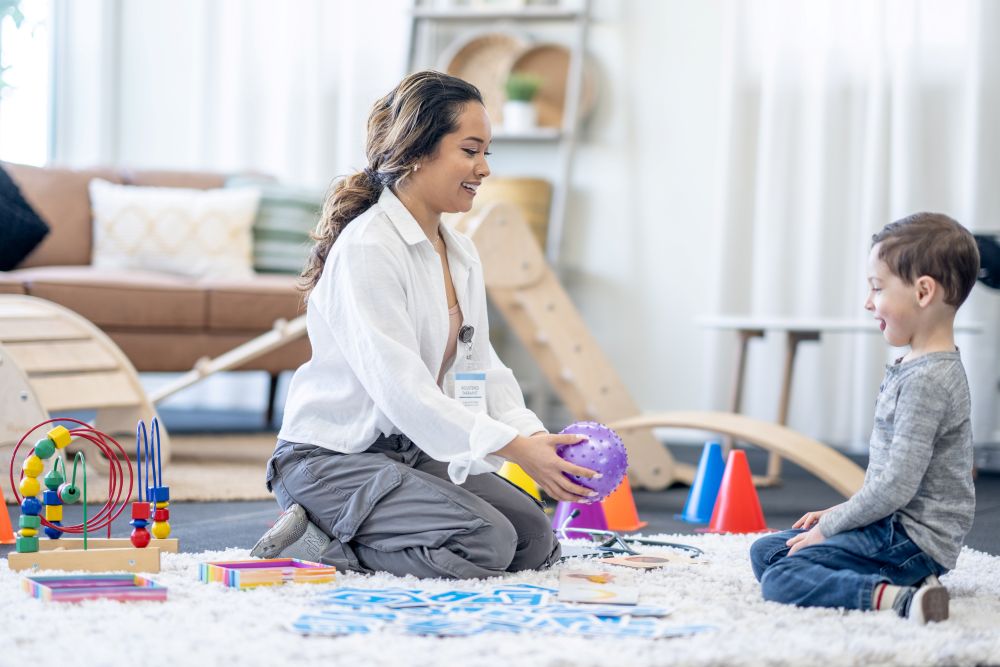
When you observe a play-based ABA program in action, it might simply look like two people having a wonderful time together. Behind every giggle and shared toy is a deliberate, scientific strategy. This approach, often referred to as Naturalistic Developmental Behavioral Intervention (NDBI), moves away from structured desk work and toward the child’s natural environment. Instead of a therapist directing every move, the child leads the way. If a child is fascinated by building blocks, the therapist joins that play, using the blocks to teach colors, turn-taking, or fine motor skills. This fluidity ensures that the child remains an active, willing participant in their own growth.
Practical Strategies for Growth in Play-Based ABA
Our approach focuses on making progress feel like a natural extension of your child’s day through thoughtful, evidence-based strategies. These strategies may include:
- Embedding specific learning goals within structured role-playing or pretend play.
- Using their favorite toys and activities as natural motivators, ensuring that every breakthrough is met with genuine joy.
- Incorporating turn-taking and cooperative games, while gradually introducing more complex tasks to support their cognitive development at a pace that feels right for them.
- Giving children a sense of choice and control during these sessions to empower their autonomy and keep their motivation high.
Benefits for Communication & Social Skills
One of the most significant advantages of play-based ABA therapy for autism is its natural facilitation of communication. When a child is genuinely interested in a toy or activity, they have a natural motivation to express their needs and desires. Whether it’s using a sign, a picture exchange, or a spoken word to ask for “more” bubbles, these “teachable moments” happen organically. Furthermore, play-based ABA therapy techniques are excellent for developing social skills. By practicing sharing, following “house rules” in a game, or making eye contact during a silly song, children learn the nuances of social interaction in a way that feels rewarding rather than demanding.
Keeping Children Motivated Through Play
Motivation is the engine of learning, and nothing motivates a young child more than play. In a play-based ABA program, the reinforcers are built directly into the activity. If a child is working on a puzzle, the reward is the satisfaction of fitting the piece into place or the shared celebration with their therapist when the picture is complete. This internal motivation is crucial because it helps children develop a genuine love for learning. When therapy feels like a playdate, children are more likely to stay engaged for longer and approach new challenges with curiosity rather than anxiety.
Supporting Emotional & Sensory Needs
We understand that children with autism often experience the world with heightened sensory sensitivity. A supportive play-based approach is inherently flexible, allowing therapists to adjust the environment to meet a child’s emotional and sensory needs in real-time. If a child becomes overwhelmed, the play can shift to a calming activity, such as deep-pressure play or quiet sensory bins. This reassurance helps children feel understood and regulated, creating a firm emotional foundation upon which new skills can be built. It’s about honoring the child’s comfort zone while gently encouraging them to explore new horizons.
Encouraging Skill Generalization Through Natural Play
A common concern in therapy is whether a child can take a skill learned in a clinic and use it at home or at school. Play-based excels at generalization in ABA because the skills are learned in contexts that mirror real life. When a child learns to follow instructions while playing “Red Light, Green Light” or practices waiting their turn during a board game, they are much more likely to apply those same behaviors on the playground or at the dinner table. Because learning occurs in a natural setting, the transition to everyday life becomes a seamless, successful experience for the whole family.
Why Play-Driven Learning Works for Young Children
For young children, play is their primary “work.” It is how they make sense of the world, test boundaries, and build relationships. By using play-driven learning, InBloom Autism Services work with the child’s natural development rather than against it. Research consistently shows that early intervention utilizing these naturalistic techniques leads to better long-term outcomes in language development and social-emotional intelligence. It respects the child’s autonomy and fosters a positive self-image, ensuring that their earliest experiences with therapy are filled with success and warmth.
Let Us Be Your Partner in Progress
Choosing a path for your child’s development is a significant decision, and it’s okay to look for a method that prioritizes your child’s happiness as much as their progress. Play-based ABA therapy offers a beautiful balance of clinical rigor and compassionate, child-centered care. It reminds us that while the goals are important, the journey should be filled with laughter and shared milestones. Ready to see your child flourish through the power of play? If you’re interested in learning more about how our play-based ABA programs can support your family, please reach out to us today.